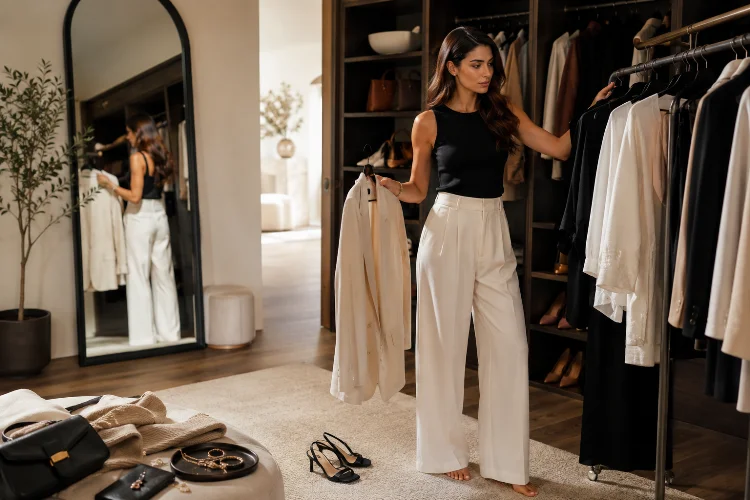
Have you ever opened a wardrobe full of clothes and still thought, “I have nothing to wear”? The problem is not always the number of clothes you own.
Sometimes, it is simply that your wardrobe does not clearly reflect who you are, what you actually do, or what makes you feel comfortable.
That is where personal style becomes useful.
Understanding personal style and how to develop it with confidence is not about finding one aesthetic label and following it forever. Personal style is a flexible visual language built from your preferences, lifestyle, body, cultural influences, comfort levels, and personality.
University of the Arts London describes personal styling as working with real people and their real lives, while considering factors such as wardrobe needs, color, fit, proportion, and lifestyle.
The goal is not to look fashionable every day. It is to understand your preferences well enough that choosing clothes becomes easier, more intentional, and more enjoyable.
1. Start With Your Real Lifestyle, Not Your Fantasy One
Personal style should work with your actual life.
It is easy to build an imaginary wardrobe for cocktail parties, creative studios, luxury holidays, or dramatic street-style photographs.
But if most of your week involves commuting, studying, working in an office, running errands, or spending time outdoors, those clothes may rarely leave the wardrobe.
UAL’s personal styling training emphasizes assessing wardrobe requirements according to lifestyle and budget rather than choosing clothing purely for appearance.
Start by thinking about how you spend a typical month.
Perhaps 50% of your wardrobe needs to work for casual everyday activities, 30% for work, and the remaining 20% for social occasions or special events.
Your percentages will obviously be different.
The important point is that your clothes should support the life you have.
Someone working in a formal office may need polished trousers, shirts, knitwear, jackets, and practical shoes. A fashion student may need more experimental pieces combined with clothing that allows comfortable movement in a studio.
Personal style becomes much easier when function and identity work together.
2. Audit the Clothes You Already Love Wearing
Before buying anything new, study what you already own.
Do not focus on what you think should be your style. Look at the garments you genuinely wear repeatedly.
Pull out ten favorite pieces.
What do they have in common?
Perhaps most are oversized. Maybe you consistently choose straight trousers, simple T-shirts, structured jackets, long skirts, neutral colors, or chunky shoes.
UAL teaches wardrobe analysis and wardrobe editing as key parts of personal styling because existing clothing provides valuable information about preferences and practical needs.
Pay attention to the clothes you rarely wear too.
Maybe a dress is beautiful but uncomfortable. Perhaps a bright jacket looks amazing online but feels too dramatic when you put it on.
Those mistakes are useful information.
Instead of saying, “I made a bad purchase,” ask what the item teaches you.
Maybe you dislike stiff collars, cropped lengths, delicate fabrics, or overly complicated prints.
Understanding what you reject can define your style almost as clearly as understanding what you love.
3. Identify Your Favorite Silhouettes and Proportions
Personal style is not only about color or aesthetics.
Shape matters enormously.
Some people naturally feel comfortable in loose, flowing silhouettes. Others prefer defined waists, cropped jackets, straight lines, oversized tailoring, or fitted clothing.
UAL’s personal styling curriculum specifically includes bodylines, scale, proportion, shape, and fit when teaching students how to create effective outfits.
Rather than trying to dress according to rigid “body type rules,” experiment with proportions and notice what feels right to you.
Try the same wide-leg trousers with three tops: one oversized, one fitted, and one cropped.
Each version changes the visual proportion.
Photograph the outfits rather than relying only on the mirror. Photos make overall silhoutte and balance easier to evaluate.
Over time, you may notice recurring formulas.
Maybe you like fitted tops with relaxed trousers. Perhaps you prefer long coats over narrow silhouettes or oversized shirts with shorter bottoms.
These repeated combinations can become the foundation of your personal style.
4. Create a Personal Color Direction
You do not need to discover one “perfect” color palette and reject everything else.
However, knowing which colors you enjoy wearing can make your wardrobe easier to combine.
Look at your favorite garments.
Are they mostly black, gray, cream, and navy? Do you naturally gravitate toward warm earth tones? Perhaps your wardrobe is full of saturated green, orange, pink, or cobalt blue.
UAL’s personal styling courses include color analysis, contrast levels, color theory, and creating cohesive palettes as part of building practical wardrobes.
One useful approach is to identify several foundation colors and a smaller group of accents.
For example, your core wardrobe might consist of black, denim blue, white, and charcoal. Burgundy and forest green could provide variation.
That does not mean you can never wear yellow.
It simply creates a color structure that makes mixing clothes easier.
Also consider fabric.
Black velvet, faded black denim, and shiny black satin technically share a color but create very different moods. Texture can add variety even within a limited pallete.
5. Use Inspiration Without Copying Someone Else
Inspiration is useful, but personal style disappears quickly when you copy complete outfits without understanding why you like them.
Create a folder of images that genuinely attract you.
They can come from movies, fashion archives, street style, musicians, designers, art, vintage photographs, friends, or people you see in daily life.
Then analyze patterns.
Maybe you repeatedly save looks with long coats, monochrome outfits, silver jewelry, relaxed tailoring, and vintage sneakers.
Those repeated elements matter more than the individual images.
UAL describes styling as a form of visual storytelling that can communicate identity through clothing and accessories.
Instead of copying a complete celebrity outfit, isolate one principle.
Perhaps you like the contrast between tailored trousers and casual sneakers. Try that relationship using pieces you already own.
This process turns inspiration into interpretation.
Your goal is not to become someone else’s version of stylish. It is to understand what their outfit reveals about your own preferences.
6. Experiment Before Creating Style Rules
Personal style develops through testing.
You will not discover it entirely by making mood boards or reading styling guides.
Wear things.
Try combinations that initially feel unusual. Tuck a shirt differently. Add a belt to a garment you normally wear loose. Combine formal trousers with casual footwear.
Take photos.
Then pay attention to how you actually feel throughout the day.
Research has linked clothing choices and fit with self-perception, identity, and confidence, suggesting that the experience of wearing clothes matters alongside their visual appearance.
One 2024 study involving 502 fashion consumers examined how fit-related evaluations were connected with confident clothing decisions and psychological responses.
Clothing has also been studied as a way people communicate and negotiate aspects of identity.
This is why confidence cannot simply be purchased.
A fashionable garment that makes you constantly adjust, hide, or question yourself may contribute less to personal style than something simpler that feels completely natural.
Experimentation helps identify that difference.
7. Build Outfit Formulas for Easier Dressing
People with recognizable personal style often repeat themselves more than you might think.
They simply repeat strategically.
An outfit formula is a combination that reliably works for you.
For example:
Wide trousers + fitted knit + structured jacket + simple sneakers.
Or:
Long skirt + oversized shirt + boots + statement jewelry.
You can change colors, fabrics, and individual garments while maintaining the same underlying structure.
This creates consistency without making every outfit identical.
Capsule wardrobe concepts use a related idea: a smaller selection of compatible garments can generate many combinations when the pieces work together.
UAL’s intermediate styling course, for example, teaches capsule planning based on lifestyle and demonstrates how a limited garment selection can produce a surprisingly large number of outfits.
Outfit formulas are especially helpful on busy mornings.
Instead of asking, “What should I wear?” from zero, you start with a structure you already trust.
Then you can experiment with accessories or one unexpected element.
8. Let Trends Enter Your Wardrobe Selectively
Personal style and fashion trends do not have to compete.
You can enjoy trends without rebuilding your identity every season.
UAL includes trend awareness within personal styling education but treats it alongside wardrobe requirements, lifestyle, proportions, and individual needs rather than as the only styling consideration.
When a trend interests you, ask whether it connects naturally with something you already wear.
Suppose burgundy becomes popular.
If you already enjoy deep colors and own plenty of black, navy, and gray, a burgundy bag or sweater may integrate easily.
But if you dislike the color, you do not need it just because your social feed suddenly becomes full of burgundy outfits.
Trends should provide possibilities, not instructions.
A strong wardobe usually contains both stable personal favorites and occasional new ideas.
That balance allows your style to evolve without becoming completely dependent on what is currently popular.
9. Shop More Slowly and With Clearer Criteria
Once you understand your preferences, shopping changes.
Instead of asking, “Is this item nice?” you can ask, “Does this item belong in my wardrobe?”
That is a much more useful question.
Consider whether the garment fits your lifestyle, works with existing pieces, feels comfortable, supports your preferred proportions, and adds something genuinely useful.
The Fashion Institute of Technology’s styling education includes practical exploration of personal styling and developing an individual’s own approach to style.
Try imagining at least three outfits using the item before buying it.
If you can only imagine wearing a shirt with the exact trousers, shoes, and jacket displayed in the shop, it may not be very versatile.
Buying slowly also gives you time to identify patterns in your mistakes.
Eventually, you may discover that you repeatedly buy statement shoes but mostly wear simple ones, or that you admire delicate fabrics but prefer sturdier materials in real life.
That self-knowledge is more valuable than owning more clothes.
10. Allow Personal Style to Change
Personal style is not a final destination.
Jobs change. Bodies change. Budgets, climates, relationships, interests, and lifestyles change.
Your wardrobe will naturally change with them.
UAL’s intermediate styling program connects clothing choices with personality, lifestyle, fabric, fit, finish, color, and changing practical needs.
Research into clothing and identity also supports the idea that what people wear can participate in the ongoing construction and expression of identity rather than representing something permanently fixed.
This means changing your mind is allowed.
You may love minimalism for several years and later become interested in vintage prints. Perhaps you stop wearing skinny trousers and discover you feel better in relaxed tailoring.
That is not inconsistency.
It is evoluton.
Confidence comes from knowing that you can change while still making choices that feel intentional.
Understanding personal style and how to develop it with confidence is less about finding the perfect aesthetic label and more about understanding your own patterns.
Lifestyle, favorite silhouettes, colors, fabrics, fit, comfort, inspiration, and repeated outfit formulas all provide clues about what genuinely works for you.
Trends can contribute new ideas, but they do not need to control your wardrobe. The strongest personal style usually develops through observation and experimentation rather than following strict rules.
Start by auditing ten garments you love and five that you rarely wear. Identify what they reveal about your preferences, then build several outfit formulas using what you already own.
Personal style becomes more confident when getting dressed stops being about proving that you look fashionable-and starts becoming a clear expression of how you actually want to live and present yourself.