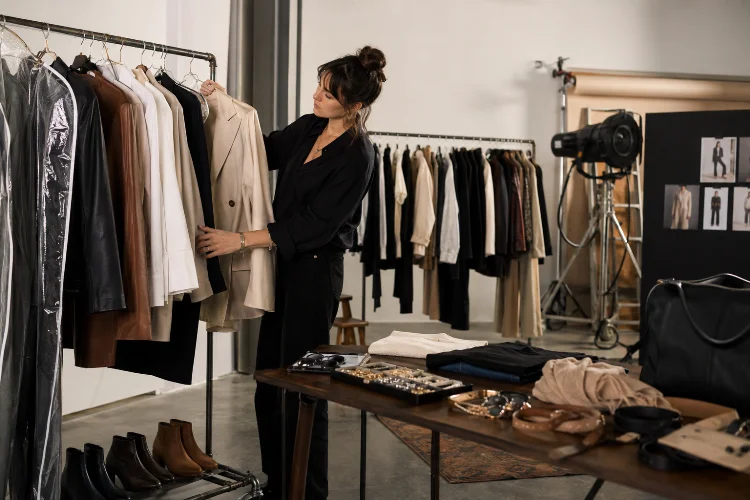
The clothes you see in a film, commercial, music video, or editorial photograph rarely appear by accident.
Even when an outfit looks effortless, someone has usually spent hours thinking about its color, silhouette, fit, accessories, practical requirements, and how it will appear through the camera.
That work often involves a wardrobe stylist, costume designer, wardrobe supervisor, or a larger costume team depending on the type and scale of production.
Understanding how wardrobe stylists plan clothing for film, media, and photography reveals that the job involves much more than choosing fashionable pieces.
Stylists need to interpret creative briefs, understand characters or brand messages, source garments, organize fittings, communicate with production departments, and anticipate practical problems before shooting begins.
UAL describes fashion styling as a combination of clothing selection, concept development, visual storytelling, and collaboration across editorial and commercial contexts.
The exact workflow changes between a feature film and a one-day fashion shoot, but the basic goal remains similar: every outfit needs to support the image or story being created.
1. Start by Understanding the Brief or Script
Wardrobe planning begins before anyone starts shopping.
For photography, advertising, or branded media, the stylist may receive a creative brief explaining the audience, mood, product, campaign message, location, and visual direction.
In scripted film and television, the process is often more detailed.
Costume designers read and break down the script, identify what each character needs, research the visual world, and coordinate their ideas with directors, producers, production designers, and hair and makeup teams.
This stage prevents styling from becoming random.
Imagine a character who begins a film as a highly controlled corporate executive but gradually leaves that environment. Clothing could support the transformation through changing silhouettes, colors, fabrics, and levels of formality.
For a sportswear advertisement, the questions would be different. The stylist might need to prioritize movement, brand visibility, color coordination, and how fabrics respond under studio lighting.
Before selecting clothes, the stylist needs to understand what the wardrobe is supposed to communicate.
2. Research the Character, Audience, and Visual World
Research helps turn the brief into a believable wardrobe direction.
For narrative productions, that might include researching the time period, occupation, income, location, personality, cultural background, and everyday habits of each character.
ScreenSkills notes that costume designers need knowledge of both contemporary clothing and historical dress while using research and visual references to communicate the intended style of a production.
For fashion photography, research may focus more on trends, designers, art, photography, music, subcultures, or a particular aesthetic.
UAL teaches stylists to interpret references, understand contemporary fashion imagery, create mood boards, and communicate concepts with photographers, editors, PR teams, and other collaborators.
A mood board can bring all of this together.
It might include clothing references, colors, fabrics, hairstyles, locations, lighting, poses, and accessories.
The goal is not to copy the images literally. Research should establish a visul direction that helps everyone understand the same creative world.
3. Build a Wardrobe Plan Before Sourcing Clothes
Professional styling becomes much easier when the stylist creates a clear wardrobe plan.
For a photography shoot, this may involve listing every planned look and the garments needed for each setup.
A film or television project can require a much more complex breakdown. A character may need work clothing, eveningwear, sleepwear, outerwear, stunt duplicates, weather-specific pieces, and different versions of the same costume.
Wardrobe teams also need to track when each outfit appears within the story.
This is particularly important because movies are rarely filmed in chronological order.
A scene from the end of the story might be filmed before a scene from the beginning. The costume team therefore needs detailed records so the character appears correctly dressed at each point in the narrative.
Screen Ireland’s costume department framework specifically identifies script breakdowns and continuity systems as key responsibilities in screen wardrobe work.
Good planning saves both time and money because it reveals what needs to be purchased, hired, borrowed, altered, manufactured, or duplicated before production begins.
4. Source Clothing With More Than Appearance in Mind
Once the wardrobe direction is approved, sourcing begins.
Stylists may work with fashion brands, PR agencies, designer showrooms, vintage stores, rental houses, costume archives, retailers, or custom makers.
But an outfit cannot be chosen simply because it looks good on a hanger.
The stylist needs to consider size availability, budget, movement, comfort, weather, camera requirements, brand restrictions, and how long the garment must survive during production.
ScreenSkills notes that wardrobe and costume supervisors coordinate clothing that must be made, hired, or purchased while keeping the department aligned with schedules and budgets.
Imagine sourcing a beautiful silk shirt for an actor who must perform an action scene repeatedly.
The fabric may wrinkle easily, show sweat, or become damaged after several takes. A visually similar but more durable option could work better.
Stylists also need backups.
A white shirt used during a messy food scene may require several identical copies so filming can continue after each take.
Practicality is part of good styling, not the opposite of creativity.
5. Use Fittings to Turn Clothing Into Complete Looks
Clothes need to be tested on the actual person wearing them.
During a fitting, the stylist evaluates fit, proportion, comfort, movement, accessories, footwear, and how different pieces work together.
ScreenSkills describes fittings as an important part of costume preparation, with looks photographed and reviewed before approval for production.
A jacket that looked perfect during sourcing may overwhelm the actor’s frame. Trousers may need hemming, or a neckline might interfere with a microphone.
Photography creates similar surprises.
A garment that feels subtle in person can appear much louder through the camera, while tiny accessories may disappear completely.
Photograph Every Approved Look
Fitting photographs are extremely useful.
Capture front, side, and back views when necessary, along with accessories and footwear.
These images become references for future dressing and continuity.
They also help directors, photographers, clients, or editors approve the complete look before the shoot.
Accurate fiting records can prevent confusion when dozens of garments are being managed simultaneously.
6. Think About Camera, Lighting, and Movement
Wardrobe is ultimately being prepared for a camera.
That changes the decision-making process.
Tiny patterns can sometimes behave strangely on camera. Highly reflective materials may react strongly to lighting, while black garments can lose detail if the lighting does not reveal their texture.
Color also needs coordination with the set.
A green dress against a similarly colored environment may visually disappear, while a bright red coat could dominate a frame more than intended.
Stylists therefore communicate with photographers, cinematographers, production designers, and creative directors.
UAL emphasizes that fashion stylists need to understand the wider creative team and communicate effectively with photographers and other professionals involved in producing fashion imagery.
Movement matters too.
If the actor needs to run, dance, sit on the floor, or perform stunts, the clothing must allow it.
A fashion photograph may intentionally prioritize dramatic silhoutte over practicality, but film wardrobe often needs to remain functional through repeated takes.
The best solution depends on what the scene or image needs.
7. Continuity Becomes Critical During Film and Television
Continuity is one of the biggest differences between styling a single photograph and working on screen production.
Suppose a character wears a blue shirt with the sleeves rolled twice in one scene.
If the camera angle changes and the sleeves suddenly appear unrolled, audiences may notice the mistake.
Continuity becomes even more complicated when garments become wet, dirty, damaged, or altered during the story.
ScreenSkills identifies accurate documentation of costume continuity as a core responsibility of standby costume staff. These team members also maintain clothing on set and coordinate with directors, assistant directors, and script supervisors.
Photos and detailed notes help.
A continuity record might capture which buttons were open, how a scarf was tied, whether a jacket was zipped, what jewelry was worn, and exactly how damaged or dirty a garment should appear.
For long productions, these details can be tracked across weeks or months.
Organization is therefore just as important as taste.
8. Wardrobe Must Be Maintained Throughout the Shoot
The stylist’s work does not end when the outfit is approved.
Clothing needs to arrive clean, steamed, organized, labeled, and ready at the right location and time.
During production, garments may need repairs, adjustments, cleaning, or replacement.
ScreenSkills explains that wardrobe supervisors oversee costume preparation, maintenance, cleaning, repairs, continuity, storage, and eventual returns after filming.
That is why a stylist’s kit can be surprisingly practical.
Pins, clips, fashion tape, needles, thread, scissors, stain remover, lint rollers, steamers, safety pins, and other emergency tools can solve problems quickly.
Imagine discovering three minutes before a photograph that a trouser waistband is slightly loose.
There may be no time for a full alteration.
The stylist needs a temporary solution that looks perfect from the camera’s perspective.
Being prepared for small emergencies is part of professional wardobe managment.
9. Collaboration Keeps the Entire Visual Story Consistent
Wardrobe never operates completely alone.
In film, costume teams collaborate with production design, hair, makeup, direction, camera departments, actors, producers, and script supervision.
ScreenSkills explains that costume designers work closely with directors, writers, production designers, and hair and makeup teams to establish the overall visual identity of a production.
Unscripted television creates similar collaboration. ScreenSkills notes that stylists or costume designers may plan contemporary clothing for presenters, judges, experts, and participants while coordinating the overall look with producers and production teams.
Photography involves photographers, models, creative directors, makeup artists, hairstylists, clients, and assistants.
A successful stylist needs to communicate clearly without becoming overly attached to one idea.
Sometimes the photographer discovers that another look works better with the lighting. An actor may genuinely be unable to move comfortably in a garment. A client might require a particular product to remain visible.
Creative collaboration means adapting while protecting the core visual concept.
Understanding how wardrobe stylists plan clothing for film, media, and photography shows that styling is as much about preparation and problem-solving as it is about fashion taste.
Strong wardrobe planning begins with the brief, develops through research and sourcing, becomes clearer during fittings, and continues through camera testing, continuity, maintenance, and collaboration on set.
The workflow changes depending on whether you are styling a film character, television presenter, advertisement, or editorial photograph, but every successful project requires clothing to support a specific visual purpose.
If you want to practise wardrobe styling, create a fictional three-scene character or small photo campaign.
Research the concept, plan every outfit, source alternatives, photograph your fittings, and document the final looks. Learning to think beyond individual garments is what turns styling into professional visual storytelling.