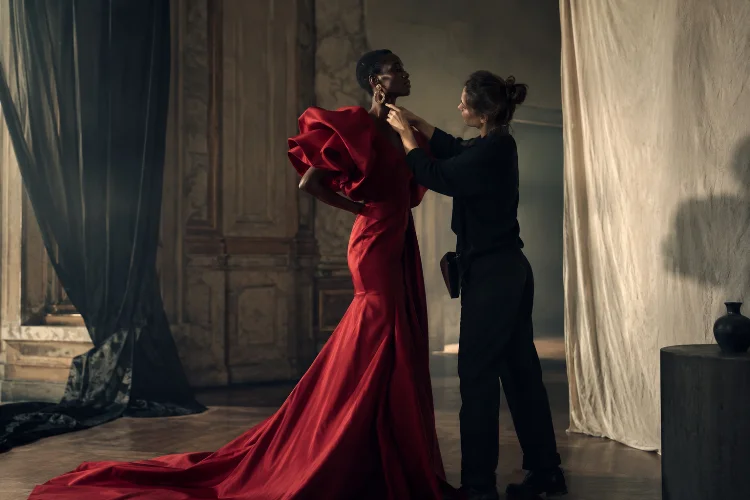
A fashion editorial can feature incredible clothes and still feel forgettable. What often separates a beautiful photograph from a memorable fashion story is not simply the designer label, model, or location-it is how all those elements work together to communicate an idea.
That is the real power of editorial fashion styling.
Unlike everyday personal styling, editorial work is usually created around a concept, publication brief, cultural idea, or visual story. Clothing becomes part of a larger composition involving photography, casting, hair, makeup, lighting, location, props, and art direction.
University of the Arts London describes fashion stylists as storytellers who combine clothing and accessories to create meaningful imagery, with editorial styling often responding to a specific thematic brief.
For aspiring stylists, this changes the way you look at clothes. A jacket is no longer just a jacket. Depending on its context, it can communicate authority, nostalgia, rebellion, vulnerability, futurism, or something completely unexpected.
The goal is not simply to make the model look fashionable. It is to make every visual decision contribute to the story.
1. Every Strong Editorial Starts With a Clear Concept
Before sourcing clothes, a stylist needs to understand what the shoot is actually about.
A strong concept gives the entire creative team direction.
The idea might come from a film, historical event, painting, social observation, music scene, subculture, architecture, or fictional character. It can also begin with a broader theme such as isolation, transformation, nostalgia, technology, or identity.
UAL’s editorial styling training specifically covers researching and pitching contemporary fashion concepts, interpreting briefs, creating mood boards, and preparing fashion shoots.
Suppose the theme is “future nostalgia.”
That phrase alone creates possibilities. The stylist might combine retro tailoring with metallic accessories, vintage-looking hairstyles with futuristic makeup, or old domestic interiors with experimental contemporary fashion.
A clear concept acts like a filter.
Whenever you consider adding a garment, prop, or location, ask: does this make the story clearer, or am I including it simply because it looks cool?
That question can prevent an editorial from becoming visually impressive but conceptually confusing.
2. Clothing Becomes a Storytelling Tool
In commercial styling, clothing may need to look desirable and clearly display the product.
Editorial styling often allows more interpretation.
A stylist might layer garments in unexpected ways, mix different decades, exaggerate proportions, reverse conventional gender codes, or deliberately create tension between clothing and environment.
UAL describes fashion styling as a practice that combines concept development and visual storytelling to communicate identities, ideas, and brand values.
Imagine photographing a delicate couture dress inside an abandoned industrial warehouse.
The contrast immediately creates questions.
Is the character lost? Powerful? Vulnerable? Is the story about luxury surviving decay?
Now imagine the same dress inside an ornate ballroom. The emotional meaning changes even though the garment remains identical.
This shows why editorial styling is about context.
A successful stylist understands both the clothing and the visual narative surrounding it.
3. Build Looks With Shape, Color, and Texture
Once the story is clear, garments need to work visually within the frame.
Silhouette is one of the strongest tools.
An enormous coat can make a character appear protected or powerful. A narrow fitted silhouette can feel controlled, elegant, or restrictive depending on the concept.
Color creates another layer.
A monochromatic editorial may feel controlled and atmospheric, while highly contrasting colors can produce energy or conflict.
Texture matters too.
Mixing polished leather with fragile lace creates a different emotional effect from combining soft knitwear with washed cotton.
The stylist should think about how these elements will photograph rather than judging garments only on a clothing rack.
A highly detailed black garment, for example, can lose definition under dark lighting. A transparent fabric may become dramatically more interesting when backlit.
The stylist therefore needs to consider silhoutte, surface, lighting, movement, and background together.
Clothing is not being experienced in isolation. It is being transformed into an image.
4. Casting Can Completely Change the Meaning
The person wearing the clothing is part of the editorial language.
Casting should therefore happen in relation to the concept rather than as an afterthought.
A model’s age, energy, movement, facial features, hairstyle, and presence can change how an outfit is interpreted.
The New School’s Inside Fashion Styling course explores how styling participates in wider social narratives, including appearances, body politics, contemporary identities, and cultural change.
This highlights why casting has meaning.
Imagine styling traditional tailoring on someone expected to represent corporate authority. The image may reinforce familiar codes.
Place the same clothing on an unexpected character, change the posture, or introduce unusual makeup, and those conventions can be questioned.
Editorial fashion photography has historically been able to explore identity because clothes communicate social signals.
The V&A has similarly examined photography and clothing as tools through which gender, identity, performance, and resistance can be represented.
For stylists, casting is therefore not only about finding someone who “looks good” in the clothes.
It is about finding the person who makes the story interesting.
5. Location and Set Design Create the World Around the Clothes
An editorial needs a world.
Sometimes that world is minimal: a clean studio backdrop, controlled lighting, and nothing else.
Other projects require elaborate sets, real locations, furniture, unusual props, or cinematic environments.
The V&A’s documentation of photographer Tim Walker’s work shows how stylists and other creative collaborators contribute to the fantastical environments surrounding his fashion imagery.
This demonstrates the importance of collaboration between styling and set design.
If your concept is about suburban boredom, a perfectly polished luxury hotel may not communicate the idea as effectively as a quiet kitchen, empty parking lot, or repetitive housing estate.
However, avoid making the location compete unnecessarily with the clothing.
A complicated dress against a visually chaotic background can become difficult to read.
Sometimes contrast works beautifully. Sometimes simplicity gives the garment space.
The stylist and photographer should decide where the viewer’s attention needs to go first.
6. Accessories and Details Can Carry Major Narrative Weight
Small details can completely change a fashion story.
A pair of gloves, glasses, jewelry, socks, shoes, hat, handbag, or even the way a shirt is buttoned can communicate character.
Imagine a perfectly tailored suit.
Add polished loafers and a traditional watch, and the styling may feel classic.
Replace them with heavy boots, layered chains, and deliberately messy styling, and the personality changes immediately.
That is why accesories should not be treated as decoration added five minutes before the shoot.
They are storytelling tools.
Props work similarly.
A suitcase could suggest travel or departure. Flowers may communicate romance, grief, celebration, or artificial beauty depending on how they are used.
Editorial styling becomes stronger when details have a reason to exist.
If an accessory does not support the composition, character, or concept, removing it can be more effective than adding another one.
7. Collaboration Turns a Styling Idea Into an Image
Editorial fashion is rarely created by one person.
Stylists work with photographers, creative directors, models, makeup artists, hairstylists, set designers, assistants, editors, designers, PR teams, and sometimes retouchers or graphic designers.
UAL emphasizes collaboration and the role of the stylist within the on-set team as fundamental parts of planning and producing editorial fashion stories.
Communication is therefore essential.
A stylist may imagine “romantic chaos,” but that phrase could mean completely different things to the photographer and makeup artist.
A mood board helps.
Show references for lighting, posture, clothing, color, makeup, location, and emotional tone. Explain what should be copied conceptually and what is simply there for atmosphere.
The best collaborations allow everyone to contribute without losing the central idea.
Stylists should be flexible too.
A planned garment may look wrong under the final lighting. Wind might completely change an outdoor shoot. A model may move differently than expected.
Strong creative direction creates structure while leaving room for discovery.
8. Styling Must Work Through the Camera
One of the most important skills for editorial stylists is learning to evaluate clothing through a photograph.
Something can look fantastic in person but weak on camera.
Check the frame constantly.
Is the sleeve creating an awkward shape? Has the necklace disappeared under the collar? Is the skirt folding in a way that changes the intended silhouette?
Stylists frequently make small adjustments between shots.
They may pull fabric backward, roll a sleeve, expose more of a shoe, adjust a collar, change layering, or remove an accessory completely.
The V&A’s fashion photography workshop highlights composition, model direction, lighting, and storytelling as interconnected parts of creating fashion imagery.
This means the stylist should understand enough about photography to anticipate what the camera will see.
You do not have to become a professional photographer.
But knowing basic framing, lighting, movement, and composition makes styling decisions much stronger.
The final product is the image-not simply the outfit standing beside the camera.
9. Image Sequencing Turns Photos Into a Complete Story
A successful shoot may produce hundreds of photographs.
The editorial usually needs only a small number.
Editing and sequncing therefore become part of storytelling.
UAL’s creative direction course specifically teaches students how to edit fashion images into a story and develop them into editorial layouts.
Imagine an eight-page editorial.
The opening image might establish the character and environment. The second reveals the clothing more clearly. Later photographs introduce movement, closer details, or emotional tension.
The final image should feel like an ending rather than simply another photograph.
Not every picture needs the same composition.
Mix full-body images with portraits, details, movement, and environmental shots when appropriate.
The V&A notes that fashion photography has historically operated through editorials and advertising while helping shape wider culture, demonstrating that fashion images can carry meanings far beyond simply documenting garments.
Good sequencing transforms separate photographs into a visual experience.
Editorial fashion styling creates powerful visual narratives when clothing becomes part of a larger storytelling system.
Concept, silhouette, color, texture, casting, accessories, location, photography, and creative collaboration all influence what the final images communicate.
The stylist’s job is therefore much bigger than selecting attractive garments. Strong styling asks why each item exists within the frame and what it contributes to the character, emotion, or broader idea.
If you want to practise editorial styling, begin with one simple concept and create a six-image story around it. Develop a mood board, choose a small wardrobe, plan the location, and think about how each photograph should move the narrative forward.
When every creative decision supports the same idea, fashion photography stops being a series of nice outfits-and becomes a story worth remembering.