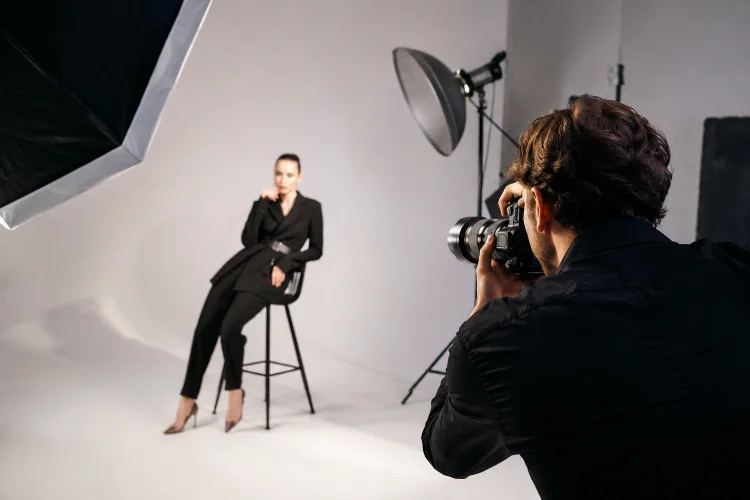
Fashion photography is much more than pointing a camera at someone wearing beautiful clothes.
A strong image needs to communicate the garment, capture attention, create atmosphere, and often tell a story about a brand, designer, character, or lifestyle.
That combination of creativity and technical control is what makes professional fashion photography such an interesting field.
Fashion photographers work across magazine editorials, advertising campaigns, lookbooks, e-commerce, social media, runway coverage, and personal creative projects.
Each format has different expectations. An e-commerce photograph needs to show clothing clearly, while an editorial image may prioritize emotion, experimentation, or visual storytelling.
UAL’s fashion photography training reflects this broad skill set, covering model direction, natural and studio lighting, commercial shoots, magazine photography, retouching, color grading, mood boards, and collaboration with stylists.
For beginners, the key is not buying the most expensive camera. It is learning how light, composition, clothing, people, and technical choices work together inside one frame.
1. Start With a Clear Fashion Photography Concept
Before thinking about lenses or lighting, decide what the photograph needs to communicate.
A commercial sportswear campaign might focus on movement, energy, and product visibility. A luxury editorial could use dramatic styling and unusual locations to create a more mysterious visual world.
Professional fashion photographers often begin with research and mood boards.
A mood board can include poses, clothing references, colors, lighting styles, locations, makeup, textures, and overall atmosphere. It provides direction for the photographer, stylist, model, makeup artist, and other people involved.
Fashion photography has always operated somewhere between commercial communication and artistic experimentation. The V&A notes that this tension has contributed to technical and creative innovation throughout the history of the genre.
Before a shoot, try describing your concept in one sentence.
If the idea is unclear before photography begins, adding expensive equipment rarely fixes the problem.
2. Understand Exposure and Camera Control
Professional results require photographers to understand what the camera is doing.
Three important exposure controls are aperture, shutter speed, and ISO.
Aperture affects exposure and depth of field. A wide aperture can create a blurred background, while a narrower aperture keeps more of the scene sharp.
Shutter speed controls how motion appears. A fast shutter can freeze a jumping model or moving dress, while a slower shutter can intentionally create motion blur.
ISO changes the camera sensor’s sensitivity to light. Higher ISO settings can help in darker environments but may introduce additional image noise.
Adobe recommends learning manual mode because it gives photographers direct control over aperture, shutter speed, and ISO.
Fashion photography creates an extra challenge: the clothes need to remain visible.
A very shallow depth of field might create a beautiful portrait but leave important garment details out of focus. Adobe specifically notes that photographers may need to adjust aperture when fashion pieces need greater sharpness across the frame.
Technical settings should support the fashion, not distract from it.
3. Learn to Shape Light Instead of Simply Adding More
Lighting is one of the most important fundamentals of fashion photography.
The direction, size, intensity, and quality of a light source can completely change the same model and outfit.
Soft light generally creates smoother transitions between highlights and shadows. Harder light can produce sharper shadows, stronger contrast, and a more graphic feeling.
You do not need a complicated studio immediately.
A large window can become a beautiful natural light source. A reflector can reduce unwanted shadows, while a simple flash and modifier can create many different effects.
Adobe recommends experimentation with lighting and suggests taking test photographs before the model arrives so exposure and lighting problems can be corrected early.
Profoto similarly emphasizes light direction, intensity, and overall mood when creating fashion photographs. Different setups can emphasize texture, create drama, or produce neutral lighting suitable for clearly displaying clothing.
Try changing one variable at a time.
Move one light higher. Bring it closer. Move it sideways.
Understanding these small changes is more valuable than using five lights without knowing what each one contributes.
4. Use Composition to Give the Fashion Visual Impact
Composition determines how the elements inside the frame relate to each other.
The model, clothing, background, props, negative space, and camera angle all contribute to the final image.
Adobe’s editorial fashion photography guidance recommends experimenting with balance, symmetry, framing, cropping, and different angles to create stronger compositions.
For example, photographing from slightly below can exaggerate height and make a silhouette feel more dominant.
Shooting from above produces a completely different relationship between the model and environment.
Negative space can also be powerful.
You do not need to fill every part of the photograph. Leaving empty areas around the model can make the fashion stand out and may provide useful space for magazine typography or advertising copy.
Avoid complicated compositon simply because it looks artistic.
Ask where the viewer should look first.
If the photograph is meant to showcase an unusual coat, the background and props should not unintentionally become more visually important than the coat itself.
5. Direct Models Instead of Expecting Them to Pose Automatically
Fashion photographers work with people, so communication is a professional skill.
Do not simply tell a model to “do something fashionable.”
Give useful direction.
Ask the model to shift weight onto one leg, turn the shoulder toward the light, walk across the frame, interact with the clothing, or create a particular emotional attitude.
UAL includes model direction and posing as central skills within fashion photography training.
Movement is particularly useful when clothing needs to come alive.
Long dresses, coats, scarves, wide trousers, and flowing fabrics may photograph more effectively when the model walks, turns, or moves rather than holding a static pose.
The V&A’s history of fashion photography highlights how photographers such as Richard Avedon helped move fashion imagery toward more dynamic, spontaneous pictures in which models appeared active rather than completely rigid.
Good direction should also feel respectful and collaborative.
Explain the concept clearly, demonstrate poses when useful, and give feedback about what is working.
Confidence in front of the camera often improves when the photographer communicates with confidence behind it.
6. Work Closely With Fashion Stylists and the Creative Team
Fashion photography is rarely a solo activity.
Photographers commonly collaborate with stylists, models, makeup artists, hairstylists, creative directors, designers, assistants, and set designers.
UAL specifically includes working with stylists among the practical skills required for producing successful fashion shoots.
The photographer needs to pay attention to clothing throughout the shoot.
Check whether collars have folded incorrectly, jewelry has moved, skirts are twisted, labels are showing, or garments have developed distracting wrinkles.
Adobe recommends reviewing images during the shoot because correcting a styling problem on set is usually easier than fixing it later in editing.
This is where collaboration matters.
A stylist may notice garment issues the photographer misses while concentrating on exposure and framing. A makeup artist watches the face, while an assistant monitors equipment.
The strongest teams share responsibility for the final image.
Small accesories can also have significant visual impact, so details should never be ignored simply because the main garment looks correct.
7. Choose Locations and Backgrounds With Purpose
A background changes how clothing is interpreted.
A minimalist studio can keep attention completely on the fashion. A city street adds movement and cultural context, while an elaborate interior can make a photograph feel cinematic.
Fashion photographers have historically moved between controlled studios and real environments.
The V&A documents how mid-century photographers increasingly took models onto city streets, while later fashion photography developed everything from documentary approaches to highly constructed fantasy environments.
Location should support the concept.
Imagine photographing an elegant evening dress.
Inside a classical hotel, it might communicate traditional luxury. Place the same garment at an empty petrol station at night, and the visual narrative becomes stranger and more contemporary.
Also consider practical factors.
Check available light, weather, permissions, electrical access, changing areas, safety, and whether the location provides enough space for the team.
Professional photograpy involves planning for what happens outside the frame as well as what appears inside it.
8. Capture Fashion for the Intended Final Platform
Not every fashion photograph has the same job.
Editorial photography can prioritize mood and narrative. Lookbook photography generally needs greater consistency so buyers and viewers can compare garments.
E-commerce photography usually places even more importance on accurate product visibility.
Social media creates different framing requirements again because images may need to work vertically on a small smartphone screen.
Profoto’s fashion photography guidance emphasizes consistency in product imagery and recommends establishing visual standards covering lighting, framing, exposure, and image organization.
Think about the final destination before shooting.
A wide horizontal image designed for a magazine spread may crop badly when converted into vertical social content.
Professional photographers often capture alternative compositions during the same setup.
Planning these variations during production is usually easier than discovering afterward that the client needs an image format you never created.
9. Use Post-Production to Refine, Not Rescue, the Image
Editing is part of the professional fashion photography workflow.
Basic post-production may involve exposure adjustments, color correction, contrast, cropping, skin retouching, removing temporary distractions, and ensuring consistency across a series.
UAL includes Photoshop retouching and color grading as part of its fashion photography training.
Adobe also recommends shooting RAW for greater flexibility when adjusting exposure, white balance, and other image characteristics during post-processing.
However, editing should not become an excuse for poor preparation.
Fix the collar on set rather than rebuilding it digitally later. Remove distracting objects from the background before pressing the shutter whenever possible.
Retouching also requires judgment.
Skin does not need to become completely textureless, and clothing should not be altered so heavily that customers receive a misleading impression of the actual product.
Good retouchng strengthens what was captured successfully rather than inventing an entirely different photograph.
10. Develop a Consistent Visual Style Through Practice
Professional fashion photographers need technical ability, but recognizable work also comes from visual identity.
Look at photographers you admire and study specific choices rather than simply calling their work “beautiful.”
How do they use light?
Are their compositions minimal or chaotic? Do models appear elegant, awkward, energetic, distant, or natural? Are colors muted or highly saturated?
The V&A’s fashion photography collection demonstrates how photographers across different eras developed radically different visual approaches—from classical studio compositions and Surrealist experimentation to street photography and elaborate fantasy.
Your style develops through similar experimentation.
Create small shoots with limited equipment. Try one natural-light project, one hard-flash setup, one studio portrait series, and one location editorial.
Review the results afterward.
Identify which photographs feel strongest and ask why.
Consistent practice gradually reveals the lighting, compositions, colors, subjects, and storytelling methods that genuinely interest you.
Understanding the fundamentals of professional fashion photography means learning to combine technical control with creative communication.
Camera settings, lighting, composition, model direction, styling, location, and post-production all influence whether an image successfully presents fashion and communicates a clear visual idea.
You do not need an enormous studio or expensive equipment to begin. You need control over the tools you already have and a willingness to experiment carefully.
Start with one model, one outfit, one location, and one clear concept. Shoot several lighting and composition variations, then analyze which decisions made the clothing and story stronger.
The more intentionally you practise, the easier it becomes to move beyond simply taking photographs of clothes-and start creating fashion images with a recognizable point of view.