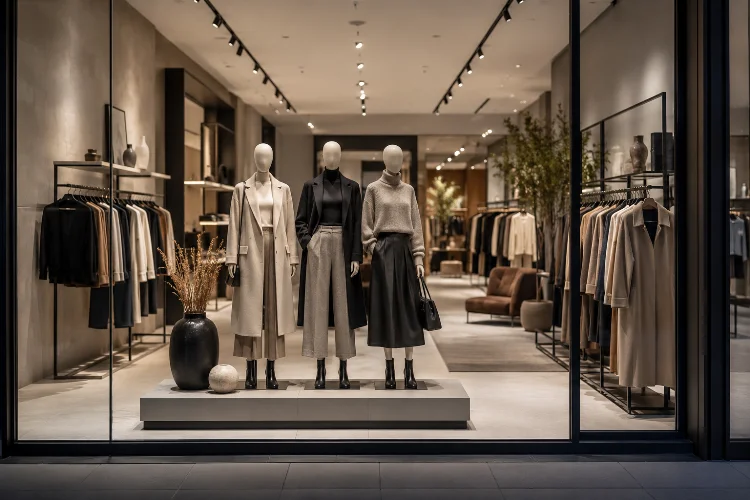
Walk into two fashion stores selling similar clothes, and you can have completely different experiences. One feels confusing and crowded, while the other immediately shows you what is new, where to look, and which pieces work together.
That difference often comes down to visual merchandising.
Visual merchandising is the practice of presenting products and designing retail environments in ways that attract attention, communicate brand identity, improve the shopping experience, and support sales.
University of the Arts London describes it as an essential part of fashion retail marketing that combines product displays with engaging shopping experiences.
For fashion students, store managers, and aspiring retail professionals, understanding this discipline is useful because a fashion product does not exist in isolation.
The way a jacket is displayed, lit, styled, positioned, and surrounded by other products can influence how customers perceive it.
Good visual merchandising turns a store into more than storage for clothes. It creates a visual journey that helps shoppers discover products and understand the world of the brand.
1. Visual Merchandising Connects Fashion With the Customer
A fashion collection may look impressive on a runway, but retail requires a different type of communication.
Customers need to understand the merchandise quickly.
Visual merchandising organizes clothing so shoppers can identify categories, discover new products, compare options, and imagine how items could fit into their own wardrobes.
Shopify describes visual merchandising as a combination of product displays, store layout, lighting, décor, branding, and other environmental cues used to encourage shoppers to explore and purchase.
Think about a new collection arriving in a store.
Instead of placing every garment randomly on racks, a visual merchandiser might create a front display featuring the strongest pieces. Coordinated shirts, trousers, bags, and shoes could appear nearby.
The customer no longer sees separate products.
They see an outfit and a lifestyle.
This is why fashion merchandisng sits somewhere between creativity and commercial strategy.
2. Window Displays Create the First Impression
Before customers enter a physical store, they often meet the brand through the window.
A window display can introduce a seasonal campaign, showcase new arrivals, communicate a promotion, or simply make someone curious enough to walk inside.
Research on clothing stores has found that window displays can influence perceptions of the store and customers’ decisions about whether to enter.
Modern retailers may create merchandise-focused windows that clearly show clothing or more conceptual displays built around art, props, storytelling, and unusual installations.
Neither approach is automatically better.
A minimalist luxury label may use one mannequin and dramatic lighting. A youth-focused streetwear store might combine multiple outfits, graphics, music references, and bold props.
Shopify also notes that window displays can highlight new products, reinforce brand image, and connect physical stores with broader seasonal campaigns.
The important question is simple: does someone passing the store understand enough of the visual message to become curious?
3. Store Layout Guides How Customers Move
Visual merchandising is not limited to mannequins and decorative displays.
The entire store layout matters.
Where customers enter, which direction they naturally walk, where new products appear, and how easily they can move between categories all affect the shopping experience.
A good layout creates a path without making shoppers feel controlled.
Key products may be placed in high-visibility zones, while displays can encourage people to move deeper into the store.
Planograms are sometimes used to organize this process. They provide visual maps showing where merchandise should be positioned within retail fixtures or displays.
For fashion retailers, however, organization should not become too rigid.
Customers often want to touch fabrics, compare colors, and browse nearby products.
The challenge is creating enough structure to make shopping simple while preserving the sense of discovery that makes fashion retail enjoyable.
An effective retail enviroment should answer basic customer questions without requiring constant assistance: Where are the jackets? What is new? Which items belong together?
4. Product Grouping Helps Customers Imagine Complete Outfits
One of the most useful visual merchandising techniques is coordinated product grouping.
Instead of showing trousers only with other trousers, stores can combine them with shirts, footwear, jackets, and accessories.
This creates context.
A customer who originally intended to buy a blazer might notice how it works with a particular shirt and bag. In retail language, this can support cross-selling while also making styling easier for the shopper.
Research published in the International Journal of Retail & Distribution Management found that different fashion product-display methods-including organization by style coordination and color—can produce different responses in shopper interest, pleasure, and spending.
Create a Clear Visual Hierarchy
Not every item should compete equally for attention.
A display might feature one statement coat as the focal point, supported by quieter knitwear, trousers, and accessories.
This hierarchy helps customers understand what to notice first.
Too many statement pieces can create visual noise.
A strong display usually has a dominant idea supported by secondary products rather than dozens of items demanding attention simultaneously.
5. Color and Lighting Shape Product Perception
Color is one of the fastest ways to organize merchandise visually.
Retailers can group similar tones, create seasonal palettes, introduce contrasting accents, or use color repetition to connect different displays.
A neutral collection displayed against a calm background can communicate minimalism. The same products surrounded by highly saturated colors may feel completely different.
Lighting has an equally important role.
General lighting helps customers move around, while accent lighting can highlight mannequins, new products, or premium merchandise.
Lighting also affects color accuracy and texture.
A black wool coat contains details that can disappear under poor lighting, while shiny materials may become overly reflective under aggressive spotlights.
Recent eye-tracking research into fashion mannequin displays has also examined how attributes including lighting conditions and mannequin characteristics influence consumer visual attention.
Visual merchandisers therefore need to consider what shoppers will actually see, not simply what a display looks like during installation.
6. Mannequins Turn Products Into Styling Ideas
Mannequins are especially important in fashion because they show garments on a human-like form.
A folded shirt communicates fabric and color.
A mannequin wearing that shirt with trousers, a jacket, shoes, and accessories communicates style.
That difference is powerful.
Mannequins help customers understand proportion, layering, combinations, and possible occasions for wearing the product.
They can also communicate the identity of the brand.
A luxury retailer may use carefully spaced mannequins with controlled poses. A sportswear brand might prefer active body positions to suggest movement.
Research published in 2026 found that mannequin characteristics and lighting conditions can affect visual attention within fashion retail displays, highlighting the strategic role these fixtures can play rather than treating them simply as decoration.
However, mannequins should support the merchandise.
Over-styling them with excessive layers and accesories can make it difficult for customers to understand which products are actually being presented.
7. Visual Complexity Needs to Be Controlled
Fashion stores need enough merchandise to appear interesting, but more visual information is not always better.
Too many racks, colors, signs, products, and decorative elements can make a store mentally tiring.
Research examining the visual environment of fashion stores found that the relationship between visual complexity and consumer approach behavior can depend on how organized the environment feels and on differences between shoppers.
This suggests a useful practical lesson: complexity needs structure.
A store can carry a large assortment while still maintaining clear categories, repeated visual rules, and enough empty space around focal displays.
White space-or negative space-is therefore valuable in retail.
Leaving space around a premium handbag can make it appear more significant. Filling the same shelf with twenty products creates a different perception.
Good visual merchandising is partly about editing.
Sometimes removing three products creates stronger visibilty for the seven that remain.
8. Visual Merchandising Supports Brand Identity
A strong store should feel recognizably connected to the brand.
Fixtures, materials, typography, lighting, music, colors, mannequins, and displays can all reinforce the same identity.
UAL’s visual merchandising training emphasizes how brands engage customers through spatial environments and how design principles are translated into windows and retail spaces.
Imagine three stores selling a white T-shirt.
A luxury retailer might place it in a spacious environment using refined materials and minimal displays.
A streetwear store could present the same category against industrial fixtures and graphic visual elements.
A sustainable brand might emphasize natural materials, product information, repair services, or explanations of sourcing.
The product category is similar, but the context changes its meaning.
Consistency is especially important today because customers often interact with brands both online and offline.
The visual story in a store window, website, social campaign, packaging, and seasonal promotion should feel connected rather than completely unrelated.
9. Great Displays Should Be Measured, Not Just Admired
Visual merchandising is creative, but fashion retailers still need to know whether it works.
A beautiful display that receives compliments but never encourages product interaction may not be performing its commercial purpose.
Retailers can observe foot traffic, conversion, product sales, dwell time, inventory movement, and customer responses before and after display changes.
For example, if a jacket performs poorly on a standard rack but sales increase after it becomes the centerpiece of a styled mannequin display, that change provides useful information.
Academic research has also linked window displays and in-store design with impulse-buying behavior in fashion and footwear settings.
This does not mean every display should aggressively push customers to buy.
A store also needs to build recognition, communicate identity, and create a pleasant experience.
The strongest visual merchandising decisions balance creativity, customer needs, brand storytelling, and commercial performance.
Understanding visual merchandising and its role in fashion retail reveals how much thought goes into the environment surrounding a product.
Window displays attract attention, store layouts guide movement, product groupings suggest outfits, and lighting, color, mannequins, and negative space shape customer perception.
Effective visual merchandising is not simply about making a store beautiful. It helps shoppers understand the merchandise while communicating what the brand represents.
If you want to practise this skill, choose a small fashion collection and design three versions of its retail presentation: a window, a mannequin display, and an in-store product wall. Decide what customers should notice first and why.
The more intentionally you organize the visual journey, the more effectively a retail space can turn clothing into a clear and memorable brand experience.