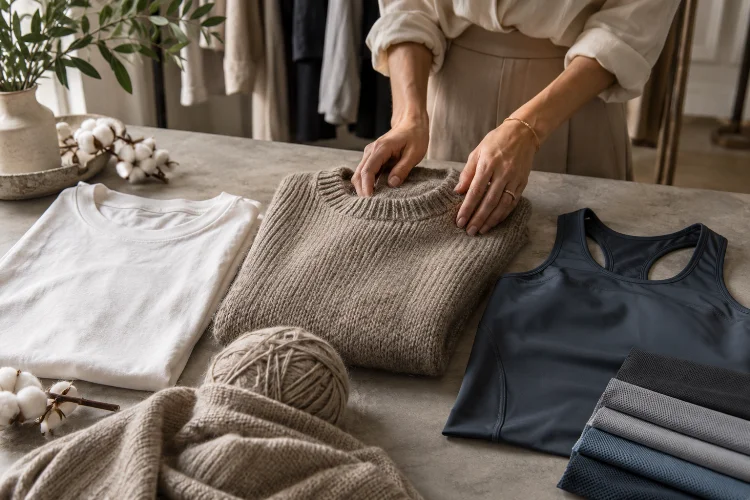
Pick up a cotton T-shirt, a wool sweater, and a polyester running top. They may all look like ordinary clothing, but the fibers inside them behave in surprisingly different ways.
Cotton can feel soft and comfortable against the skin. Wool can manage moisture while helping regulate temperature.
Polyester can be lightweight, strong, wrinkle-resistant, and quick to dry. None of these properties happens by accident – they come from the structure and chemistry of the fibers.
Understanding how natural and synthetic fibers differ in fashion and performance is useful for designers, shoppers, and anyone learning about textiles.
Fiber choice influences much more than how a garment feels. It affects drape, durability, stretch, moisture management, care requirements, environmental impact, and even the types of clothing a designer can realistically create.
There is also no universal “best” fiber. A breathable summer shirt, waterproof shell, formal coat, and running legging all demand different things.
The real question is not which category wins. It is which material makes sense for the job.
What Are Natural and Synthetic Fibers?
Natural fibers originate from plants or animals.
Common plant-based examples include cotton, linen, hemp, and jute, while animal fibers include wool, silk, alpaca, and cashmere. Their properties vary enormously, so describing all natural materials as if they behave the same way can be misleading.
Cotton, for instance, is largely cellulose and can readily take in moisture. CottonWorks explains that the internal structure of cotton fibers allows liquids to be drawn into spaces within the fiber, contributing to their absorbent behavior.
Synthetic fibers are manufactured through chemical processes. Common examples include polyester, nylon, acrylic, and elastane.
Traditional synthetic fibers are generally made from fossil-fuel-derived chemical feedstocks. Textile Exchange notes that synthetics accounted for a majority of the global fiber market in its referenced 2021 data, with polyester being the most widely used synthetic fiber.
There is also a middle category worth knowing: man-made cellulosic fibers such as viscose and lyocell. They typically begin with natural cellulose, often from wood pulp, but undergo substantial processing before becoming textile fibers.
Natural Fibers Often Excel at Comfort and Moisture Absorption
One reason natural fibers remain popular is comfort.
Cotton is widely used for T-shirts, underwear, dresses, shirts, and casual clothing because it can feel soft against the skin and absorb moisture. However, absorption is not the same thing as drying quickly.
A cotton shirt may soak up sweat effectively, but once it becomes saturated, it can remain wet for longer than many synthetic performance fabrics.
Wool behaves differently.
Wool fibers can absorb and release moisture vapor, helping manage the small climate between the body and clothing.
The International Wool Textile Organisation reports that wool can absorb substantial moisture relative to its own weight while still supporting thermal and humidity regulation.
That is why fine merino wool appears not only in winter sweaters but also in hiking tops, socks, base layers, and travel garments.
The key lesson is that brethability and moisture performance are not determined by whether a fiber is simply “natural.” Each material behaves differently.
Synthetic Fibers Are Built for Durability and Technical Performance
Synthetic fibers became enormously important partly because engineers can create materials with very specific performance characteristics.
Polyester is a good example.
Textile Exchange describes polyester as strong, durable, crease-resistant, and quick drying. These qualities explain why it appears in everything from inexpensive everyday clothing to technical sportswear.
Nylon is also known for strength, durability, and stretchiness. It is widely used in activewear, swimwear, hosiery, outdoor clothing, and technical products where abrasion resistance and flexibility matter.
Then there is elastane, commonly blended into other fibers to add stretch and recovery.
Think about fitted leggings. Pure cotton might feel comfortable, but adding a small amount of elastane allows the garment to stretch around the body and then return closer to its original shape.
Synthetic materials therefore become especially valuable when designers need durabilty, stretch, lightweight construction, water resistance, or fast drying.
Their usefulness is one reason performance clothing relies so heavily on engineered fibers.
Fiber Choice Changes the Look and Feel of Fashion
Performance is not only about sports.
Fiber selection also changes the visual personality of a garment.
Silk can create fluid movement and a luxurious surface. Linen often has a crisp but relaxed character. Wool can range from soft, lightweight suiting to thick outerwear.
Synthetic materials offer an equally broad range.
Polyester can be engineered to imitate silky, wool-like, or textured surfaces. Nylon can produce lightweight technical fabrics, while acrylic is often used to create soft knitted products that resemble some characteristics of wool.
However, fiber is only part of the story.
Yarn structure, weave, knit construction, finishing treatments, and fabric weight can completely change how a material performs. Two fabrics labeled “100% polyester” can feel remarkably different because they were constructed and finished differently.
This is important for aspiring designers.
Do not select a material simply because its fiber name sounds appropriate. Touch it, stretch it, drape it, wash-test it when possible, and observe how it behaves.
Natural and Synthetic Fabrics Have Different Care Needs
Fiber choice also influences what happens after a customer buys the garment.
Some natural materials require relatively careful treatment.
Wool can sometimes shrink or felt when exposed to inappropriate heat and agitation. Silk may require gentle washing or specialist care, depending on the fabric and finishing. Linen wrinkles easily, although that relaxed wrinkled appearance is also part of its appeal.
Synthetic materials are often easier to maintain.
Polyester typically resists wrinkles and dries relatively quickly, making it useful for uniforms, travel clothing, activewear, and everyday garments that need regular washing.
But easy care does not mean zero problems.
Synthetic sports clothing, for example, can sometimes retain odors, while high temperatures may damage certain synthetic fibers or elastic components.
Designers therefore need to think beyond the fitting room.
A gorgeous garment that becomes extremely difficult to clean may frustrate its owner. Care requirements should match the intended customer and use.
Environmental Impact Is More Complicated Than “Natural vs Synthetic”
It is tempting to assume natural equals sustainable and synthetic equals harmful.
Reality is much more complicated.
Conventional synthetic fibers such as polyester and nylon generally depend on fossil-based raw materials.
Synthetic textiles can also release plastic microfibers during manufacturing, wearing, washing, and disposal. The European Environment Agency identifies synthetic clothing as a continuing source of unintentional microplastic pollution.
However, natural fibers have impacts too.
Growing cotton requires land, water, agricultural inputs, and subsequent textile processing. Animal fibers involve livestock systems and their associated land and resource considerations. Dyeing and finishing can add further environmental pressures regardless of the original fiber.
UNEP’s analysis of textile value chains highlights this complexity: different stages dominate different environmental impacts, with synthetic fiber production important for climate impacts and cotton cultivation particularly relevant to water-scarcity pressures in some contexts.
In other words, there is no simple environmental scoreboard based only on the fiber label.
A garment’s lifespan matters too.
A well-used jacket worn for ten years tells a different sustainability story from a supposedly “eco-friendly” garment worn twice and discarded.
The most responsible choice depends on sourcing, manufacturing, use, care, durability, recycling possibilities, and end-of-life treatment.
Blended Fabrics Try to Combine the Best Properties
Fashion designers often avoid choosing between natural and synthetic fibers completely.
They blend them.
A cotton-polyester shirt can combine cotton’s comfort with some of polyester’s wrinkle resistance and faster drying. A wool-nylon sock may use wool for moisture and temperature management while nylon adds abrasion resistance.
Cotton-elastane denim provides another familiar example.
Traditional cotton denim can feel rigid. Adding a small percentage of elastane creates stretch, helping fitted jeans move more comfortably with the body.
Blends are useful because designers can adjust material properties for a particular purpose.
However, they can introduce recycling challenges. Separating different fiber types from one fabric can be technically difficult, which complicates circular textile systems.
This is one reason current textile innovation is exploring better recycling systems, alternative materials, and more circular product design. UNEP identifies circularity and life-cycle thinking as important areas for transforming the textile sector.
How Designers Choose the Right Fiber
Professional fiber selection starts with the garment’s purpose.
For a summer shirt, a designer might prioritize airflow, softness, and moisture comfort. For hiking trousers, abrasion resistance, quick drying, flexibility, and low weight might matter more.
A formal coat requires another combination entirely: structure, warmth, drape, surface appearance, and long-term shape retention.
Price matters as well.
The perfect luxury fiber may make no business sense for an affordable clothing line. Availability, minimum order quantities, production methods, certification requirements, and target retail price can all influence the final choice.
Smart designers therefore ask practical questions:
What should this garment feel like? How should it move? How often will it be washed? Does it need stretch? Should it provide warmth or release heat? How long should it last?
Fiber selection becomes much easier once the desired perfromance is clear.
Understanding how natural and synthetic fibers differ in fashion and performance helps explain why textile selection is such an important part of clothing design.
Natural materials such as cotton and wool can provide comfort, moisture management, distinctive texture, and other valuable properties.
Synthetics such as polyester and nylon offer strength, quick drying, stretch, and technical versatility. Blends can combine advantages from both categories.
Neither group is automatically superior, and neither has zero enviromental impact.
If you are learning fashion design, start examining the labels on clothes you already own. Compare their fiber content with how they feel, stretch, wrinkle, dry, and age.
Building that connection between fiber science and everyday clothing is one of the easiest ways to develop a stronger understanding of textiles.