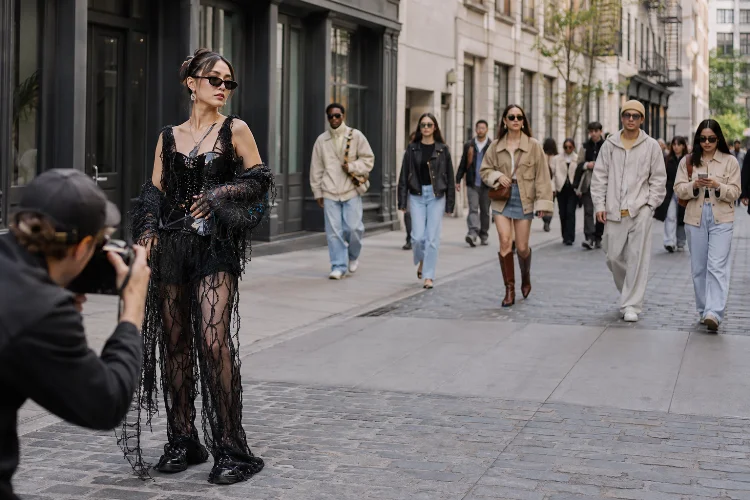
One year, everyone seems to be wearing oversized blazers. A few seasons later, fitted jackets suddenly feel fresh again.
Sneakers become enormous, handbags become tiny, low-rise jeans return from the early 2000s, and colors that once looked outdated somehow become desirable again.
Fashion trends can seem unpredictable, but they rarely appear from nowhere.
Understanding how fashion trends begin, spread, and eventually lose popularity means looking at a combination of culture, designers, communities, celebrities, social media, retailers, technology, and everyday consumer behavior.
Some trends develop slowly over several years, while others explode online and disappear within months.
The traditional fashion trend cycle usually moves through introduction, growing adoption, mainstream popularity, saturation, and decline. However, digital platforms have made that journey faster and less predictable.
For fashion students, marketers, designers, and curious shoppers, understanding this process is useful because it explains not only what becomes fashionable, but why people collectively decide that something feels new, desirable, overdone, and eventually outdated.
1. Fashion Trends Usually Begin With Cultural Change
A fashion trend does not always start with a designer deciding what everyone should wear next.
Many trends begin with broader changes in society. Music, technology, economic conditions, entertainment, politics, nightlife, sports, art, environmental concerns, and changing lifestyles can all influence how people want to present themselves.
WGSN describes a genuine trend as a broader shift in how people, communities, and societies think, feel, or behave.
It distinguishes these longer cultural movements from short-lived fads that may become highly visible without creating meaningful long-term behavioral change.
Consider the popularity of comfortable clothing during periods when people spend more time working from home. A change in lifestyle can increase interest in relaxed tailoring, knitwear, sneakers, elasticated trousers, and versatile clothing.
The trend therefore begins with a need or cultural mood before it becomes a specific fashion product.
Designers and trend forecasters try to identify these early signals before they become obvious. WGSN, for example, combines cultural, consumer, search, social, runway, and retail information to identify emerging directions.
2. Innovators and Subcultures Often Introduce New Looks
Some trends begin far away from mainstream fashion.
Young people, musicians, artists, skateboarders, club communities, sports fans, and other subcultures frequently experiment with clothing before larger brands notice what is happening.
Punk is a classic historical example. Clothing that originally expressed rebellion and anti-establishment attitudes eventually influenced established designers and luxury fashion.
Streetwear followed a similar path. Styles connected with skateboarding, hip-hop, sneakers, and youth communities gradually became influential across the global fashion industry.
This movement is sometimes described as trickle-up fashion, where ideas move from street culture or smaller communities toward mainstream brands rather than beginning with luxury designers.
Today, niche online communities can accelerate this process.
A distinctive shoe, skirt shape, styling combination, or secondhand item may begin appearing repeatedly among a relatively small group. Once enough people notice it, its visiblity increases and the style begins moving beyond its original community.
That early stage is important because a trend still feels unusual enough to attract attention.
3. Influencers, Celebrities, and Social Media Accelerate Adoption
Once a style receives wider exposure, people need to see it repeatedly before it begins to feel familiar.
Historically, fashion magazines, celebrities, films, television, and runway shows played major roles in this process. Today, Instagram, TikTok, YouTube, Pinterest, online stores, and creator communities can spread visual ideas much faster.
TikTok’s 2026 trend research describes its platform as an environment where communities, creators, cultural conversations, and discovery can influence how people interact with brands and ideas.
One creator wearing an unusual pair of shoes may not create a trend. But when hundreds of creators start producing styling videos featuring similar shoes, consumers receive repeated visual reinforcement.
The item begins to feel recognizable.
Social media also allows trends to develop names. A particular aesthetic may receive a catchy label, hashtag, or “core” identity, making it easier for users to search for and reproduce.
This can dramatically accelerate fashion adoption because people are no longer simply seeing clothing-they are being given a template for participating in the trend.
4. Retailers Turn Emerging Trends Into Mass-Market Products
A trend becomes much bigger when retailers decide there is enough consumer interest to produce it at scale.
Imagine that fashion forecasters identify growing interest in burgundy accessories. Designers begin experimenting with the color, influencers wear it, search activity increases, and retailers notice stronger sales.
Soon, burgundy bags, shoes, jackets, knitwear, and dresses appear across different price categories.
WGSN explains that retail signals such as new product arrivals, markdowns, and out-of-stock activity can provide clues about whether a trend is growing, reaching its peak, or beginning to weaken.
Its trend analysis incorporates large volumes of product information to monitor these market movements.
Retail availability creates a feedback loop.
More products mean more people can purchase the trend. More people wearing it increases exposure. Increased exposure encourages more brands to produce similar items.
A niche idea can therefore move from a runway, music scene, or online community into shopping centers and mass-market websites surprisingly quickly.
5. The Peak Arrives When Everyone Recognizes the Trend
The peak stage occurs when a fashion trend reaches widespread acceptance.
At this point, consumers do not need fashion knowledge to recognize it. The trend appears across luxury fashion, mid-market retailers, affordable brands, social media, advertisements, and street style.
This is often the most commercially valuable stage.
The problem is that popularity contains the seeds of decline.
Part of fashion’s appeal comes from novelty and identity. When something becomes extremely common, early adopters may start searching for alternatives because the style no longer feels distinctive.
Imagine an unusual sneaker becoming fashionable.
At first, only enthusiasts wear it. Then celebrities adopt it. Influencers post it. Major retailers create similar versions. Eventually, dozens of brands offer nearly identical designs.
That widespread availability is commercially successful, but it also increases saturaton.
Once consumers feel they have seen the same look everywhere, excitement begins to disappear.
6. Consumer Fatigue Pushes Trends Into Decline
Fashion trends rarely disappear overnight.
Instead, people gradually stop paying attention.
Search activity may decline, retailers begin discounting excess inventory, influencers move toward new aesthetics, and consumers become less interested in buying another version of something they already own.
WGSN notes that rising markdown activity combined with other retail signals can indicate that a fashion direction is beginning to level out after strong growth.
Economic conditions can accelerate this process as well.
McKinsey’s State of Fashion 2025 reported increased price sensitivity among consumers and highlighted how changing customer preferences are forcing fashion brands to rethink product positioning and value.
Consumers are not simply passive recipients of trends. They constantly decide whether a product still feels useful, exciting, culturally relevant, or worth buying.
McKinsey’s broader consumer research also suggests that digital platforms influence brand discovery even though people may place greater trust in recommendations from friends and family.
A trend therefore loses momentum when fewer consummers feel motivated to participate.
7. Some Trends Die, While Others Become Classics
Decline does not necessarily mean a fashion idea disappears forever.
Some trends become so practical or culturally established that they move into long-term wardrobes.
Denim jeans are an obvious example. Specific fits change-skinny, straight, wide-leg, flare-but denim itself remains important.
Other items move between fashionable and unfashionable periods.
Cargo trousers, ballet flats, platform shoes, corsets, mini skirts, oversized tailoring, and low-rise jeans have all experienced multiple waves of popularity.
Fashion is cyclical because new generations often rediscover styles without having experienced their previous popularity.
A twenty-year-old consumer may see a 1990s or early-2000s silhouette as exciting even when an older shopper remembers wearing something similar decades earlier.
Designers also reinterpret old ideas using different fabrics, technology, proportions, and cultural references.
That is why saying a trend is “dead” can be misleading. It may simply be waiting for the conditions that make it relevant again.
8. Trend Forecasting Tries to Predict What Happens Next
Because trends affect inventory, marketing, product development, and sales, fashion businesses invest heavily in understanding what consumers may want next.
Professional forecasting goes beyond scrolling through viral posts.
WGSN explains that its forecasting methodology combines expert interpretation with data from social activity, sentiment, searches, fashion shows, retail products, cultural shifts, technology, and consumer behavior.
Fashion companies can use these signals to decide which colors, silhouettes, materials, and product categories deserve investment.
However, trends remain difficult to predict perfectly.
A celebrity moment, unexpected film, viral video, economic event, or niche online community can suddenly change what people find interesting.
Modern fashion is therefore less predicatable than a simple seasonal calendar suggests.
The best approach is not to chase every viral item. Instead, designers and brands should understand the deeper consumer needs behind a trend and determine whether those needs fit their own identity.
Understanding how fashion trends begin, spread, and eventually lose popularity reveals that fashion is much more than a collection of random style changes.
Trends usually emerge from cultural shifts or creative communities, gain visibility through designers and media, expand through influencers and retailers, reach saturation, and eventually decline as consumers search for something new.
Digital platforms have accelerated this cycle, but the underlying principle remains similar: fashion changes when people’s lifestyles, identities, tastes, and expectations change.
The next time a new aesthetic suddenly seems to appear everywhere, look beyond the product itself. Ask where it started, who adopted it first, and what larger cultural need it represents.
Learning to recognize those signals can help you understand fashion-and perhaps even anticipate what might come next.